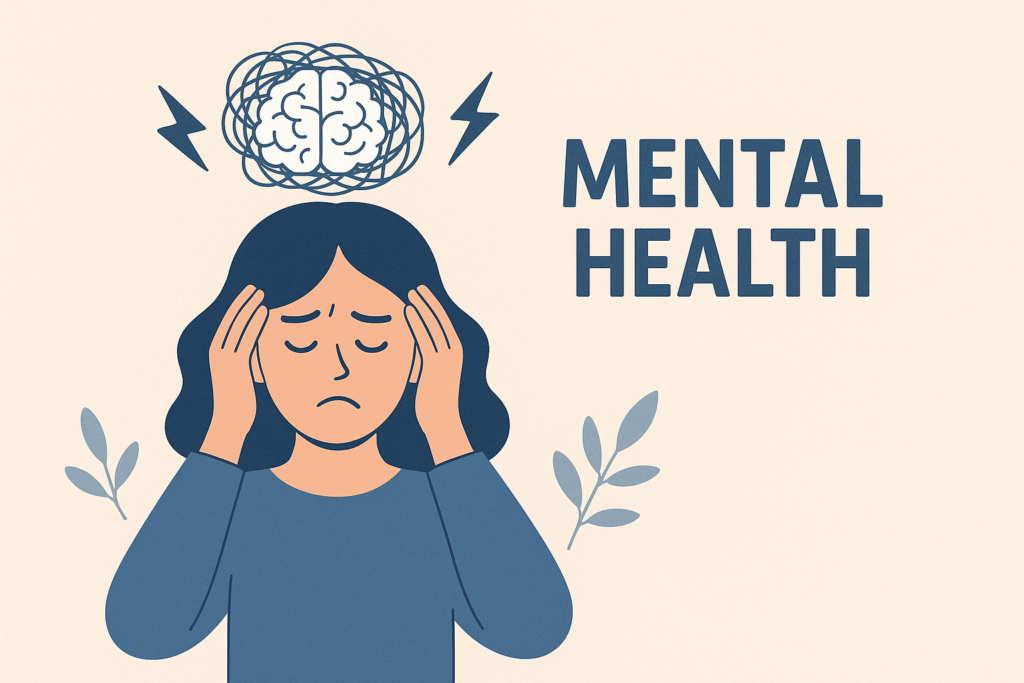

Understanding Mental Health Fundamentals

A. What Mental Health Really Means in Today’s World
Mental health isn’t just about avoiding breakdowns or managing serious conditions. It’s about how you feel, think, and act every single day.
In today’s fast-paced world, your mental health affects everything – from how you handle stress to how you relate to others and make choices. It’s not static either. Your mental wellbeing moves along a spectrum, changing with life’s ups and downs.
The digital age has completely transformed what mental health looks like. We’re more connected than ever but somehow more isolated too. Social media comparisons, endless work emails, and the pressure to be “always on” have created new challenges our parents never faced.
Mental health isn’t a luxury – it’s essential maintenance for your mind, just like exercise is for your body. And just like physical health, it needs regular attention.
B. The Mind-Body Connection: How Physical Health Impacts Mental Wellbeing
Your body and mind aren’t separate systems – they’re constantly talking to each other.
When you skip meals, your blood sugar drops, making you irritable and anxious. When you don’t sleep enough, your brain can’t process emotions properly. And when you sit all day, your mood often follows that downward curve.
Exercise isn’t just for looking good in jeans. When you move your body, it releases endorphins – natural mood boosters that can rival some antidepressants. Even a 10-minute walk can shift your mental state.
Your gut is particularly chatty with your brain. Scientists call it your “second brain” because it produces many of the same neurotransmitters. That’s why stress gives you stomach problems, and poor nutrition can trigger anxiety.
Chronic pain, hormone imbalances, and inflammation don’t just hurt physically – they can trigger depression and anxiety. Treating physical conditions often improves mental health, and vice versa.
C. Common Mental Health Conditions and Their Symptoms
Anxiety isn’t just worrying – it’s your body in constant fight-or-flight mode. Your heart races, your thoughts spiral, and everyday situations feel threatening.
Depression goes beyond feeling sad. It’s a heavy blanket that makes everything harder – getting out of bed, enjoying things you used to love, even deciding what to eat.
Many people don’t realize ADHD continues into adulthood. It’s not just about being hyper – it’s your brain struggling to regulate attention, causing you to hyperfocus on some things while completely dropping the ball on others.
Bipolar disorder involves dramatic mood swings between energetic highs and crushing lows. During manic episodes, you might feel invincible and make impulsive decisions. During depressive episodes, even basic tasks feel impossible.
Trauma responses aren’t weakness – they’re your brain’s protective mechanisms that get stuck in the “on” position. Flashbacks, nightmares, and being easily startled are your mind trying to keep you safe from threats that may no longer exist.
D. Breaking the Stigma: Why Mental Health Matters for Everyone
Mental health struggles aren’t character flaws or signs of weakness. They’re health conditions – as real as diabetes or heart disease.
The stigma around mental health prevents people from getting help. Many suffer in silence, afraid of being judged or labeled as “crazy.” This silence can be deadly.
When we talk openly about mental health, amazing things happen. People feel less alone. They seek help earlier. Recovery rates improve.
Mental health affects everyone – not just those with diagnosed conditions. Your brain responds to stress, trauma, and life changes whether you’ve been diagnosed with something or not.
The workplace is finally catching up. Progressive companies now offer mental health days and counseling benefits because they’ve realized healthy minds are more productive, creative, and loyal.
Schools teaching emotional intelligence and coping skills are seeing fewer behavior problems and better academic performance.
Mental health literacy is as important as knowing how to read. Understanding the basics helps you support yourself and others through life’s inevitable rough patches.
Effective Self-Care Strategies

A. Daily Habits That Boost Mental Wellness
Your mental health isn’t just built during therapy sessions. It’s shaped by what you do every single day.
Want to know what actually works? Start small. Five minutes of deep breathing in the morning beats an hour-long meditation session you’ll never do. Drink water before reaching for that third cup of coffee. Step outside—even for just 10 minutes—to reset your brain when you’re stressed.
Sleep is non-negotiable. Not the “I’ll catch up on weekends” kind. The consistent, phones-out-of-the-bedroom kind that your brain desperately needs to process emotions.
And those devices? They’re mental health vampires. Try this: no screens for the first and last hour of your day. Replace them with a book, conversation, or simply staring into space (seriously, it’s called daydreaming and we don’t do enough of it).
B. The Science Behind Mindfulness and Meditation
Meditation isn’t just spiritual fluff—it literally rewires your brain.
When you meditate regularly, your amygdala (the brain’s alarm system) actually shrinks. Meanwhile, your prefrontal cortex—responsible for focus, decision-making, and emotional regulation—thickens.
Brain scans show that just eight weeks of consistent meditation creates measurable changes in gray matter. That’s why long-term meditators don’t flip out over small stuff—their brains process stress differently.
Don’t know where to start? Try this: focus on your breath for 60 seconds. When your mind wanders (it will), just notice it and come back to your breath. That’s it. Do that for five minutes daily and you’re meditating.
C. Exercise as a Natural Mood Enhancer
Exercise might be the most underutilized antidepressant around.
When you move your body, your brain releases a cocktail of feel-good chemicals—endorphins, serotonin, dopamine—the same stuff targeted by antidepressant medications.
But here’s what most people miss: you don’t need to become a gym rat to get the mental benefits. Research shows that just 20-30 minutes of moderate activity—even walking—can significantly boost your mood for hours afterward.
The magic happens when you make it consistent. Three 30-minute sessions per week have been shown to reduce depression symptoms as effectively as medication in some studies.
Can’t manage 30 minutes? Start with five. Can’t run? Walk. Can’t walk far? Stretch. Movement is movement, and your brain rewards every bit of it.
D. Nutrition’s Role in Brain Health
Your brain is constantly rebuilding itself using whatever materials you give it. Feed it junk, and you’ll feel like junk.
The gut-brain connection is real—about 95% of your serotonin (the happiness chemical) is produced in your digestive tract. That’s why what you eat directly impacts how you feel.
Foods that actually boost your mental health include:
- Fatty fish (salmon, mackerel) packed with omega-3s
- Colorful fruits and vegetables (antioxidants fight inflammation)
- Fermented foods like yogurt and kimchi (probiotics support gut health)
- Nuts, seeds, and whole grains (steady energy without crashes)
Sugar and processed foods? They trigger inflammation and energy crashes that make anxiety and depression worse.
E. Setting Healthy Boundaries in Relationships and Work
People-pleasing is not a mental health strategy. It’s a one-way ticket to burnout.
Healthy boundaries aren’t walls—they’re clear guidelines about what you’ll accept. Without them, you’ll end up exhausted, resentful, and wondering where your time went.
Start by paying attention to when you feel drained versus energized. That email you dread? The friend who always dumps their problems on you? These are boundary opportunities.
The magic phrase: “I’m not able to do that, but I can offer this instead.” Or sometimes just “No, that doesn’t work for me” without the lengthy explanation your brain wants to add.
At work, boundaries might look like not checking email after 7pm, or blocking focus time on your calendar that’s as untouchable as any meeting.
Recognizing Warning Signs

Early Indicators of Mental Health Challenges
You know that feeling when something’s off but you can’t quite put your finger on it? Mental health challenges often start with subtle signs. Changes in sleep patterns are a big one – either sleeping too much or lying awake at 3 AM with your thoughts racing. Your eating habits might shift too – suddenly you’re not hungry or you’re eating everything in sight.
Friends might notice you’re withdrawing from activities you used to love. “Hey, you haven’t been to game night in weeks.” That social withdrawal is often paired with mood changes – irritability, unexplained sadness, or feeling numb.
Pay attention if your performance at work or school starts slipping. Those concentration problems aren’t just about being tired.
When Stress Becomes Dangerous
We all deal with stress – deadlines, family drama, bills piling up. But there’s a tipping point.
Stress crosses into dangerous territory when:
- You can’t bounce back after the stressor is gone
- Physical symptoms like chest pain, constant headaches, or digestive issues show up
- You’re using alcohol or substances to cope
- Your thoughts turn dark or hopeless
Your body will sound the alarm with signs like constant fatigue, grinding teeth at night, or getting sick all the time because your immune system is shot.
Understanding Anxiety vs. Normal Worry
Worry is thinking about that presentation tomorrow. Anxiety is obsessing about every possible way it could go wrong – at 2 AM, in the shower, during lunch.
Normal worry has a specific cause and goes away when the situation is resolved. Anxiety sticks around and often feels completely out of proportion.
| Normal Worry | Anxiety |
| Temporary | Persistent |
| Proportional to the situation | Often excessive |
| Can be set aside | Intrusive and hard to control |
| Usually doesn’t affect daily life | Interferes with normal activities |
If you’re avoiding situations because of fear or experiencing physical symptoms like racing heart, dizziness, or sweating – that’s anxiety knocking.
Signs That Someone May Need Professional Help
The breaking point isn’t always obvious, but there are clear signals that professional support is needed:
- Talk about suicide or feeling hopeless
- Extreme mood swings that disrupt daily life
- Increased aggression or violent behavior
- Severe changes in eating or sleeping
- Inability to manage daily responsibilities
- Paranoia or hearing/seeing things others don’t
- Excessive use of substances
Trust your gut. If you’re worried about someone (or yourself), it’s better to reach out than wonder “what if” later. Most people don’t regret getting help – they regret waiting so long to get it.
Professional Support Options

Types of Mental Health Practitioners and Their Specialties
Trying to figure out who treats what in mental health can be super confusing. Here’s the breakdown:
Psychiatrists are medical doctors who can prescribe medication. They’re your go-to for conditions like bipolar disorder or severe depression that might need medication management.
Psychologists have doctoral degrees (PhD or PsyD) and focus on therapy and testing. They’re great for anxiety, depression, and behavioral issues.
Licensed Clinical Social Workers (LCSWs) combine therapy with practical support like connecting you to community resources. They excel at helping with life transitions and family issues.
Licensed Professional Counselors (LPCs) offer therapy for various issues like stress, relationships, and grief.
Marriage and Family Therapists (MFTs) specialize in—you guessed it—couples and family dynamics.
Finding the right match matters more than the exact credentials. Someone who gets you and your specific struggles will help more than someone with impressive letters after their name but no connection.
Therapy Approaches That Actually Work
Not all therapy is created equal. These approaches have solid research backing them up:
Cognitive Behavioral Therapy (CBT) teaches you to spot and change unhelpful thought patterns. It’s fantastic for anxiety, depression, and phobias, with results often seen in 12-16 sessions.
Dialectical Behavior Therapy (DBT) combines mindfulness with emotional regulation skills. Originally developed for borderline personality disorder, it now helps with emotion management, self-harm, and substance use.
EMDR uses eye movements while processing traumatic memories. Sounds weird, works amazingly for PTSD.
Acceptance and Commitment Therapy (ACT) helps you stop fighting your feelings and instead focus on living according to your values.
The therapy that works best is the one you’ll actually stick with. A good therapist should explain their approach and be open to adjusting if something isn’t clicking for you.
Medication: Benefits, Risks, and Misconceptions
Medication isn’t a magic bullet or a character flaw—it’s just one tool in the mental health toolbox.
Benefits:
- Can reduce symptoms enough to make therapy more effective
- Might be necessary for conditions like schizophrenia or bipolar disorder
- Can provide relief when other approaches haven’t worked
Common misconceptions:
- “Meds will change my personality” — They’re designed to help you feel more like yourself, not less
- “I’ll be on them forever” — Many people take them temporarily
- “They’re addictive” — Most psychiatric medications aren’t addictive (though some require careful tapering)
Potential downsides:
- Side effects vary widely between medications and individuals
- Finding the right medication/dosage often takes trial and error
- Some medications take weeks to reach full effectiveness
The medication decision is personal. Work with a psychiatrist who listens to your concerns and monitors your progress carefully.
Affordable Mental Healthcare Resources
Mental healthcare shouldn’t be a luxury. If you’re tight on funds:
Community mental health centers offer sliding-scale fees based on income. Quality varies, but many have excellent providers.
University training clinics provide low-cost therapy with supervised graduate students—often $10-40 per session.
Online therapy platforms like BetterHelp or Talkspace can be cheaper than traditional therapy, especially with financial aid programs they offer.
Open Path Collective connects you with therapists who offer sessions between $30-60 for members (one-time $59 membership fee).
Support groups (in-person or online) provide valuable connection at little to no cost.
Mental health apps like Woebot, Sanvello, or Wysa offer accessible support between therapy sessions.
Don’t forget to check if your insurance covers mental health services—many plans do, even if the paperwork is a pain. And ask therapists directly about sliding scales; many reserve spots for clients who need financial flexibility.
Building Resilience for Long-Term Wellbeing

Developing Coping Skills for Life’s Challenges
Life throws curveballs. And sometimes, it feels like they’re coming at you non-stop. That’s why having solid coping skills isn’t just nice—it’s necessary.
Think of coping skills as your mental health toolkit. When stress hits, you need reliable tools ready to go. Deep breathing might seem basic, but it works. Five slow breaths can literally change your brain chemistry when you’re spiraling.
Journaling is another powerhouse technique. Getting thoughts out of your head and onto paper creates distance from overwhelming feelings. You don’t need fancy prompts—just write what’s bugging you.
And movement? Total game-changer. A quick walk around the block can reset your nervous system when you’re ready to snap.
Creating a Supportive Community Network
Nobody thrives alone. Period.
Building your support crew takes intention. Start with identifying people who lift you up rather than drain you. Quality beats quantity every time.
Be brave enough to ask for what you need. Most folks want to help but aren’t mind readers. Clear requests like “Could you check in on me this week?” work better than hoping someone notices you’re struggling.
Digital connections count too. Finding online communities with similar challenges can provide 24/7 understanding when local support is limited.
Remember: support goes both ways. Being there for others creates meaningful bonds that strengthen your own mental health.
Practicing Self-Compassion and Positive Self-Talk
The voice in your head matters more than you think.
Would you talk to your best friend the way you talk to yourself? Most of us wouldn’t. That inner critic needs a serious update.
Self-compassion isn’t fluffy—it’s science-backed mental strength training. When you mess up (and you will, because human), try this: put a hand on your heart and say, “This is really tough right now. Everyone struggles sometimes.”
Catch those automatic negative thoughts. When “I’m such a failure” pops up, challenge it with evidence: “I’ve overcome challenges before and learned from mistakes.”
Adapting to Change and Uncertainty
Change is the only constant. Sounds cliché until life flips upside down and you’re desperately seeking solid ground.
Flexibility isn’t just bending without breaking—it’s about growing in new directions when necessary. Start building this muscle with small daily pivots before big changes force your hand.
Uncertainty tolerance is a skill you can develop. Begin by noticing your automatic reactions to unpredictable situations. Do you immediately catastrophize? Try replacing “This is terrible” with “This is different.”
Control what you can, accept what you can’t. Simple advice that takes a lifetime to master.
Maintaining Mental Health Progress Over Time
Mental health isn’t a destination—it’s ongoing maintenance.
Progress isn’t linear. Some days you’ll crush it; others you’ll barely function. Both are part of the journey.
Create personal warning systems. Know your unique signs that things are sliding—maybe sleeping more, skipping showers, or avoiding texts. These are signals to activate your support systems before you hit crisis mode.
Schedule regular mental health check-ins with yourself. Monthly works well. Ask: What’s working? What needs adjustment? Where do I need more support?
The real win isn’t never struggling—it’s bouncing back faster each time life knocks you down.

Taking care of your mental health is a lifelong journey that begins with understanding the basics and implementing practical self-care strategies. By learning to recognize warning signs early and knowing when to seek professional support, you can address challenges before they become overwhelming. Remember that mental health resources are widely available and seeking help is a sign of strength, not weakness.
Building resilience is perhaps the most valuable investment you can make in your long-term wellbeing. Through consistent self-care practices, supportive relationships, and professional guidance when needed, you can develop the emotional tools to navigate life’s ups and downs. Your mental health matters—prioritize it today and every day.